
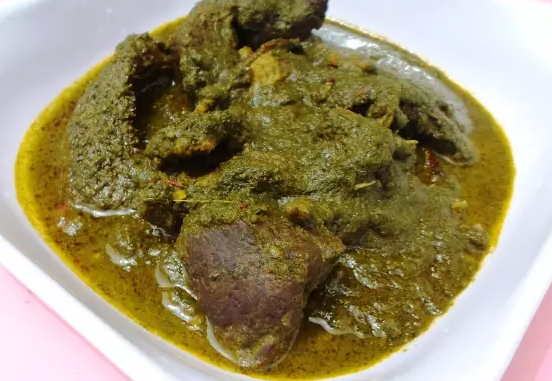
Embracing the diversity of Nigerian cuisine, we delve into the culinary tapestry of the Edo (Esan) people, uncovering the delightful and flavorsome Black Soup.
Beyond its captivating dark hue, this soup is a symphony of taste and tradition, a dish that transcends ethnic boundaries.
Also, Read
Foodstuff Nigeria: A Comprehensive List
The Essence of Black Soup
Celebrated for its delectable taste and straightforward preparation, Black Soup is a beloved Edo delicacy. Its roots in Esan culture have made it a staple in Nigerian households, offering a culinary experience that resonates with both heritage and modern palates.
The Three Essential Leaves
At the heart of Black Soup are three crucial leaves: bitter leaves, scent leaves (effirin), and uziza leaves. Some variations may opt for a combination of bitter leaf and scent leaf, but the authentic recipe insists on the triumvirate of flavors.
These leaves, ground to perfection using either the traditional Edo grinding stone or a modern electric blender, provide the soup with its distinctive color and thickness.
The Alchemy of Ingredients
The art of creating Black Soup lies in the careful selection and combination of ingredients. A tantalizing ensemble includes washed bitter leaves, sliced scent leaves, uziza leaves, roasted fish, assorted meats, ground crayfish, pepper, seasoning cubes, stockfish ear, and palm fruit sauce. The result is a potpourri of textures and flavors that dance on the taste buds.
Crafting the Culinary Masterpiece
Step 1: Leafy Elegance
Grind the three leaves together, creating a lush, green paste that serves as both the thickening agent and the source of the soup’s deep color. The bitter leaves are ground separately, ensuring each leaf contributes its unique essence to the dish.
Step 2: Meaty Symphony
Boil the assorted meats with onions, seasoning cubes, and a pinch of salt until they reach a tender, succulent state. This foundational step sets the stage for the rich symphony of flavors that follows.
Step 3: The Sauce Unveiled
Introduce the magic of palm fruit sauce (banga sauce) to the mix, along with dried fish, stockfish, and ground crayfish. Allow this flavorful ensemble to simmer, gradually thickening into a luscious concoction.
Step 4: Aromatic Harmony
Incorporate the ground leaves into the pot, stirring gently. Add seasoning cubes and salt to taste. Let the aromatic harmony of the ingredients meld together for a final five-minute simmer, and voilà – the Black Soup masterpiece is complete.
A Culinary Symphony on Your Plate
Beyond its captivating dark exterior, Black Soup is a celebration of taste, tradition, and the vibrant culture of the Edo people.
Paired elegantly with Nigerian swallows such as eba, fufu, semo, or pounded yam, this dish beckons you to embark on a culinary journey that transcends borders, inviting all to savor the richness of Nigerian cuisine.
What Is Black Soup Made Of?
Edo black soup, also known as “Owo soup” or “Ewu soup,” is a traditional Nigerian soup that is native to the Edo people of Nigeria.
The soup is popularly called black soup because it is typically dark in color. The key ingredient that gives the soup its distinctive color is the Nigerian native pear or bush pear, which is known as “Ube” in the Edo language.
Here is a basic recipe for Edo black soup:
Ingredients:
- Goat meat or assorted meat (beef, tripe, liver, etc.)
- Stockfish and/or dried fish
- Periwinkle (optional)
- Waterleaf (or substitute with spinach or fluted pumpkin leaves)
- Uziza leaves (optional, for flavor)
- Palm oil
- Ground crayfish
- Pepper
- Seasoning cubes
- Salt
- Nigerian native pear (Ube)
Instructions:
- Wash and cut the meat into bite-sized pieces.
- Season the meat with salt, pepper, and seasoning cubes. Cook until the meat is tender.
- Add the stockfish and/or dried fish to the pot.
- Wash and chop the waterleaf (or substitute) and add it to the pot. Allow it to cook for a few minutes.
- Add palm oil, ground crayfish, and pepper to the pot. Stir well.
- Peel and grate the native pear (Ube) into the pot. This is what gives the soup its dark color.
- Stir the soup and let it simmer for a while, allowing the flavors to meld.
- Taste and adjust the seasoning as needed.
- If using periwinkle, add them to the pot.
- Finally, add chopped uziza leaves for extra flavor (optional).
Serve the Edo black soup with a staple like pounded yam, fufu, or any other preferred Nigerian swallow. Keep in mind that this is a basic recipe, and variations may exist based on personal preferences and regional differences.
What Are The Benefits Of Black Soup?
The benefits of Edo black soup, also known as Owo soup or Ewu soup, are associated with its nutritious ingredients. Here are some potential health benefits:
1. Nutrient-Rich Meat
The soup typically contains various meats such as goat meat, which is a good source of protein, essential amino acids, and various vitamins and minerals.
2. Fish and Stockfish
The inclusion of fish and stockfish in the soup adds valuable omega-3 fatty acids, which are beneficial for heart health. Fish also provides protein and essential nutrients like vitamin D.
3. Vegetables
The use of vegetables like waterleaf and uziza leaves contributes to the soup’s nutritional content, providing vitamins, minerals, and dietary fiber.
4. Palm Oil
While high in calories, palm oil used in moderation provides antioxidants, vitamin E, and beta-carotene. It is also a source of healthy monounsaturated and polyunsaturated fats.
5. Native Pear (Ube)
Ube contributes to the unique color of the soup and may offer health benefits. Some traditional medicine practices attribute medicinal properties to native pears, suggesting they may have anti-inflammatory and anti-microbial effects.
6. Crayfish
Ground crayfish adds flavor and may contribute small amounts of protein, vitamins, and minerals.
7. Periwinkle
Periwinkle, if included, adds a seafood flavor and provides protein, omega-3 fatty acids, and certain minerals.
8. Local Herbs and Spices
Herbs and spices such as uziza leaves not only enhance the flavor of the soup but may also have potential health benefits. Uziza, for example, is believed to have antimicrobial properties.
9. Cultural and Social Benefits
Beyond the nutritional aspect, traditional dishes like Edo black soup often play a significant role in cultural and social aspects, promoting a sense of community and shared heritage.
It’s important to note that while Edo black soup can be a nutritious and flavorful part of a balanced diet, the overall health impact depends on the entire diet and lifestyle.
Additionally, individual dietary needs may vary, and moderation is key, especially with ingredients like palm oil, which is high in calories.
What Is Black Soup In Ondo State?
“Black soup” in Ondo State typically refers to a local delicacy known as “Ikokore.” Ikokore is a traditional dish among the Yoruba people, particularly those in Ondo State, Nigeria. The soup is made from water yam and other ingredients, giving it a thick consistency and a dark color.
The primary ingredients used in preparing Ikokore include water yam, assorted meats (such as goat meat, cow tripe, and/or fish), palm oil, crayfish, pepper, onions, and various seasonings. The water yam is grated and then cooked with other ingredients to create a rich and flavorful soup.
The dark color of the soup comes from the palm oil and other ingredients. Ikokore is often served with a starchy side dish like pounded yam, fufu, or eba. It is a popular dish in the region, reflecting the rich culinary traditions of the Yoruba people in Ondo State.
Which Soup Is The Best In Nigeria?

Nigeria has a rich culinary tradition with a variety of delicious soups, and it’s challenging to pinpoint a single “best” soup as it often depends on personal preferences. However, some popular and widely enjoyed soups in Nigeria include:
1. Egusi Soup
Made with ground melon seeds, vegetables, and meat or fish. It has a thick, hearty consistency and is often enjoyed with pounded yam, fufu, or rice.
2. Ogbono Soup
Prepared with ground ogbono seeds, vegetables, and meat or fish. It has a slimy texture and is commonly eaten with fufu or rice.
3. Pepper Soup
This is a spicy broth made with a variety of meats (such as fish, goat meat, or chicken), local spices, and herbs. It’s known for its intense and flavorful taste.
3. Edikang Ikong
A nutritious soup made with a variety of green leafy vegetables, assorted meats, and sometimes fish. It originates from the Efik people and is commonly eaten with fufu or rice.
4. Okra Soup
Made with okra (ladyfinger), meat, fish, and other ingredients. It has a viscous consistency and is often served with fufu.
5. Banga Soup
Also known as Ofe Akwu, it is a palm fruit soup commonly associated with the Igbo people. It is typically prepared with palm fruit extract, meat, fish, and spices.
It’s important to note that Nigeria is culturally diverse, and different regions may have their own variations of these soups. The “best” soup is subjective and varies from person to person based on individual tastes and cultural influences.