
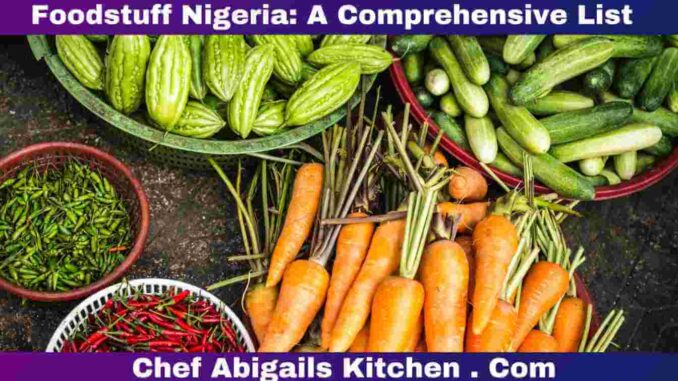
In the vibrant tapestry of Nigerian cuisine, foodstuffs and ingredients play a pivotal role, contributing not just flavor but also cultural significance to a diverse array of dishes.
From the northern plains to the coastal regions, the ingredients used in Nigerian recipes vary, reflecting the rich cultural and ethnic diversity of the nation.
Also, Read
Nigerian Noodles: How To Prepare
1. Palm Oil: A Palette of Flavor
- Palm oil takes center stage as the primary coloring agent for most Nigerian dishes. Found in almost every household, it is a staple in Nigerian soups, lending both color and a distinctive taste.
2. Food Sweeteners/Seasoning Cubes: Culinary Alchemy
- Essential for sweetening and enhancing flavors, seasoning cubes are ubiquitous in Nigerian kitchens. With countless brands and flavors, choosing the right one is an art in itself.
3. Crayfish: Savory Essence
- A key ingredient in Nigerian soups and stews, crayfish contributes a savory taste and enticing aroma to culinary creations.
4. Dried Fish: A Versatile Delicacy
- Dried catfish, a popular Nigerian foodstuff, adds depth to soups, stews, and sauces. The versatility of dried fish extends beyond catfish, showcasing the diversity of choices in Nigerian cuisine.
5. Egusi (Melon) Seeds: Thickening Agent
- Known for thickening the famous Egusi soup, these seeds are a common ingredient in Nigerian kitchens, reflecting the popularity of this beloved dish.
6. Ogbono Seeds: The Heart of Ogbono Soup
- Ogbono seeds, a permanent pantry resident, are a must-have for the classic Nigerian Ogbono soup enjoyed by a vast majority.
7. Yams: A Nigerian Staple
- With billions of tubers cultivated annually, yams hold a special place in Nigerian cuisine. From one ethnic group to another, yams are featured in diverse recipes, showcasing their versatility.
8. Goat Meat: Meaty Delight
- As a fundamental ingredient for Nigerian soups, stews, and sauces, meat, whether from goats, cows, or chickens, takes a prominent place in the culinary landscape.
9. Tomatoes & Peppers: Flavorful Duo
- Tomatoes and peppers, essential in Nigerian cooking, find their way into soups, stews, and even snack recipes, adding a vital kick to the cuisine.
10. Garri: The Eba Foundation
- A popular Nigerian foodstuff, garri, when mixed with boiled water, transforms into eba, a favored accompaniment to various Nigerian soups.
11. Nigerian Ingredients & Spices: A Flavor Symphony
- Local spices like bay leaves, dried onions, thyme, curry powder, and shallots form the backbone of Nigerian seasoning, elevating dishes like tomato stew, pepper soup, and jollof rice.
12. Stockfish Head: Soups’ Silent Hero
- A regular in Nigerian soups, stockfish head imparts a distinctive flavor to dishes such as ofe akwa and porridge beans.
13. Assorted Meats: Meaty Medley
- In a carnivorous nation, assorted meats, including cow beef, chicken, and goat meat, feature prominently in a myriad of Nigerian dishes.
14. Cocoyam: Soup Thickener Extraordinaire
- While alternatives exist, cocoyam remains the go-to soup thickener in Nigeria, adding a unique texture to various dishes.
15. Salt: Universal Essence
- A vital ingredient worldwide, salt is a constant presence in Nigerian kitchens, essential for crafting flavorful dishes.
16. Palm Fruit (Banga Seeds): Nature’s Coloring Agent
- Banga seeds, used to produce palm oil, contribute not only to color but also to the distinctive taste of Nigerian cuisine.
17. Vegetable Oil: Culinary Versatility
- Utilized for cooking and frying, vegetable oil, in its various forms including olive oil and canola oil, is a cornerstone in Nigerian culinary practices.
18. Vegetables: Nutrient-Rich Greens
- Nigerian cuisine incorporates a plethora of locally grown and imported vegetables, such as fluted pumpkin, water leaves, spinach, and scent leaves, adding both nutrition and flavor.
19. Onions: Aromatic Spice
- With numerous health benefits, onions serve as a major food spice in Nigeria, enhancing the flavors of soups, stews, and porridges.
20. Potatoes: Culinary Diversity
- Embraced in various forms, including red and white varieties, sweet potatoes, and more, potatoes are a well-known and versatile ingredient in Nigerian dishes.
21. Dried Prawn: Flavorful Accent
- Similar to crayfish, dried prawns contribute to the rich taste and aroma of Nigerian foods, enriching the culinary experience.
In conclusion, Nigerian foodstuffs and ingredients form a unique culinary landscape, reflecting the country’s cultural diversity
As we delve into the rich flavors and aromas of Nigerian cuisine, it becomes evident that each ingredient is not just a component of a dish but a testament to the vibrant heritage and traditions embedded in every bite.
What Are The List Of Food Items?
The list of food items is extensive and can vary widely based on cultural preferences, regional cuisines, and personal dietary choices. However, I can provide you with a general list of common food items across different categories:
1. Fruits
- Apples
- Bananas
- Oranges
- Grapes
- Strawberries
- Watermelon
- Mangoes
- Pineapple
2. Vegetables
- Broccoli
- Carrots
- Spinach
- Tomatoes
- Potatoes
- Bell peppers
- Onions
- Lettuce
3. Grains and Cereals
- Rice
- Wheat
- Oats
- Quinoa
- Barley
- Corn
- Bread
4. Proteins
- Chicken
- Beef
- Fish
- Tofu
- Eggs
- Lentils
- Beans
- Nuts
5. Dairy and Alternatives
- Milk
- Cheese
- Yogurt
- Butter
- Almond milk
- Soy milk
6. Fats and Oils
- Olive oil
- Butter
- Avocado
- Nuts and seeds
7. Sweets and Desserts
- Chocolate
- Ice cream
- Cake
- Cookies
- Pies
- Pastries
8. Beverages
- Water
- Tea
- Coffee
- Juice
- Soft drinks
9. Snacks
- Chips
- Popcorn
- Nuts
- Trail mix
10. Herbs and Spices:
- Salt
- Pepper
- Basil
- Oregano
- Cumin
- Garlic
- Ginger
This list is by no means exhaustive, and there are many more specific foods and dishes within each category.
Additionally, dietary preferences, cultural cuisines, and regional specialties contribute to the diversity of food items worldwide.
What Snacks Can I Sell To Make Money?
Selling snacks can be a profitable venture in Nigeria, considering the country’s diverse culinary preferences. Here are some popular snacks that you might consider selling:
1. Chin-chin
This fried pastry is a favorite in Nigeria and can be made in different flavors like vanilla, cinnamon, or even peppered for a spicy twist.
2. Puff-puff
These deep-fried dough balls are a common street food and can be served plain or with various toppings.
3. Plantain chips
Fried or baked plantain chips are a popular and healthy snack option. You can offer them in different flavors such as spicy, salted, or sweet.
4. Boli (Grilled Plantains)
Grilled plantains are another favorite. You can offer them plain or with toppings like groundnut (peanut) butter or pepper sauce.
5. Samosas
These triangular pastries filled with spiced meat, vegetables, or lentils are loved by many Nigerians.
6. Akara
These deep-fried bean cakes are delicious and can be served as a snack or breakfast option.
7. Spring rolls
Another popular snack, spring rolls can be filled with vegetables, meat, or a combination of both.
8. Coconut candy
Coconut candies made from grated coconut and sugar are sweet treats that are easy to prepare.
9. Roasted groundnuts (peanuts)
Roasted peanuts are a simple yet popular snack that can be sold in small packets.
10. Kuli-Kuli
These are spicy peanut snacks that are not only tasty but also nutritious.
11. Moimoi
This steamed bean pudding can be wrapped in leaves or foil for a convenient on-the-go snack.
12. Fruit salad cups
Offering fresh fruit salads in cups can be a healthy and refreshing snack option.
When starting a snack-selling business, consider factors like hygiene, packaging, and marketing. Also, it’s essential to be aware of any local regulations or permits required for food businesses.
Additionally, tailor your offerings to local tastes and preferences for a better chance of success.
Which Food Is Most Profitable?
Several food cooking businesses can be profitable in Nigeria, depending on factors such as location, target market, and the quality of your offerings.
Below are some potentially profitable food cooking businesses in Nigeria:
1. Catering Services
Providing catering services for events, weddings, parties, and corporate functions can be a lucrative business. Offering diverse menus and ensuring high-quality service are essential.
2. Fast Food Restaurant
Opening a fast food restaurant that serves popular Nigerian dishes or a mix of local and international cuisine can attract a wide customer base.
3. Bakery
Starting a bakery that specializes in bread, pastries, and cakes can be profitable. Nigerians consume a significant amount of baked goods, making this a potentially lucrative venture.
4. Poultry and Grill Business
A business that focuses on grilled or barbecued poultry, such as chicken or turkey, can be popular. Nigerians enjoy grilled foods, and a well-marketed business can attract a steady flow of customers.
5. Food Delivery Services
With the rise of online platforms and the convenience they offer, starting a food delivery service can be a profitable venture. This could involve partnering with existing restaurants or preparing your own specialties.
6. Local Delicacies Restaurant
Specializing in local dishes and delicacies that are popular in your region can attract customers who appreciate authentic and traditional flavors.
7. Smoothie and Juice Bar
With an increasing focus on health and wellness, a smoothie and juice bar can be a profitable business. Offering a variety of fresh and nutritious options can attract health-conscious consumers.
Before starting any business, it’s crucial to conduct thorough market research, understand your target audience, and assess the competition in your chosen niche.
Additionally, staying updated on current trends and adapting your offerings accordingly can contribute to the success of your food cooking business.