
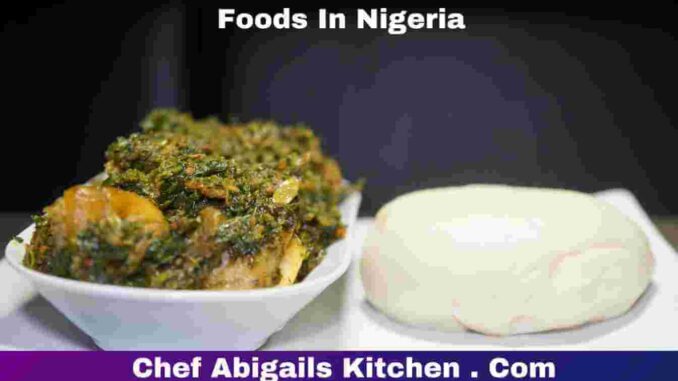
Nigeria, a country vibrant with culture and diversity, boasts a culinary scene that is as rich and varied as its people.
Stepping into the world of Nigerian cuisine is like embarking on a flavorful adventure, where each dish tells a story of tradition, local ingredients, and a passion for good food.
Also, Read
Nigerian Noodles: How To Prepare
Traditional Nigerian Culinary Delights
From the bustling streets to the local bukas (casual Nigerian restaurants), the aroma of Nigerian dishes wafts through the air, inviting both locals and visitors alike to savor the unique flavors.
Unlike the Western world, where authentic Nigerian cuisine is a rare find, in Nigeria, food is not just a necessity; it is a celebration of life, prepared with love and served straight from the heart.
A Gastronomic Tour of Nigeria: 20 Must-Try Foods
1. Iyan (Pounded Yam)
As one of the world’s largest producers of yams, Nigeria takes pride in its Iyan, a dish where yams are pounded into a smooth paste and served alongside flavorful soups.
2. Ewa Riro (Beans Porridge)
Beans take the spotlight in Ewa Riro, a dish originating from the Yoruba-speaking area, where beans are boiled, stewed with spices, and enriched with ingredients like crayfish or smoked fish.
3. Jollof Rice
A classic dish that sparks a friendly rivalry with Ghana, Jollof rice is a flavorful combination of rice, tomatoes, and peppers, often served with a variety of proteins and a side of Nigerian pepper sauce.
4. Beef Suya (Grilled Beef Strips)
A popular street food, Beef Suya features thin slices of marinated beef grilled to perfection, accompanied by tomatoes, onions, and a kick of pepper sauce.
5. Dodo (Fried Plantain)
Plantains, a versatile ingredient in Nigerian cuisine, take center stage in Dodo, featuring cubed, deep-fried plantains served as an appetizer or snack.
6. Egusi Soup (Ground Melon Vegetable Soup)
A hearty one-pot meal, Egusi soup, made with ground melon seeds or toasted pumpkin seeds, is often enjoyed with popular swallows like Fufu or Eba.
7. Nigerian Egg Rolls
A literal take on egg rolls, this Nigerian version features boiled chicken eggs covered in batter and fried to a crisp, creating a delightful finger food.
8. Puff Puff (Sweet Deep Fried Dough)
Reminiscent of beignets, Puff Puff is a simple yet mouthwatering fried dough snack topped with a dusting of powdered sugar.
9. Agege Bread
A versatile companion to many Nigerian dishes, Agege bread, denser than its American counterpart, can be enjoyed with stews or as a morning delight with eggs and fried plantain.
10. Ogbono Soup (Mango Seed Soup)
Known for its unique texture, Ogbono soup is a draw soup made with blended mango seeds, customizable with additional ingredients like melon seeds and various vegetables.
Embark on a culinary journey through Nigeria and indulge in the diverse flavors that define this West African nation.
Whether you’re savoring the warmth of Egusi soup or enjoying the crunch of Chin Chin on the streets of Nigeria, each dish is a testament to the country’s rich culinary heritage.
So, when in Nigeria, let your taste buds explore the wonders of authentic Nigerian cuisine.
What Are Common Nigerian Foods?
Nigeria has a rich and diverse culinary tradition with a wide variety of delicious and flavorful dishes. Some common Nigerian foods include:
1. Jollof Rice
A popular and widely loved dish made with rice, tomatoes, onions, and a blend of spices. It’s often served with grilled or fried chicken, beef, or fish.
2. Pounded Yam and Egusi Soup
Pounded yam is a starchy side dish made by boiling yams and then pounding them until smooth. Egusi soup is a thick soup made with ground melon seeds, leafy vegetables, and various meats or fish.
3. Efo Riro
A rich spinach or kale-based stew cooked with tomatoes, peppers, onions, and assorted meats or fish.
4. Suya
Grilled and seasoned skewered meat, usually beef or chicken, served with sliced onions, tomatoes, and spicy pepper sauce.
5. Akara
Fried bean cakes made from black-eyed peas and spices. It is a popular breakfast or snack item.
6. Moi Moi
A steamed bean pudding made from grounded peeled beans, onions, and various spices. It can be eaten alone or as a side dish.
7. Fufu
A generic term used to describe starchy side dishes such as pounded yam, cassava, or plantains that have been boiled, pounded, and formed into a stretchy, dough-like consistency. It is often served with soups and stews.
8. Chinchinga (Suya Kebabs)
Skewered and grilled meat, often sold by street vendors, flavored with a spicy peanut spice mix.
9. Ofada Rice and Ayamase Sauce
Ofada rice is a local variety of rice often served with Ayamase sauce, a spicy pepper sauce made with green bell peppers and assorted meats.
10. Boli
Grilled plantains usually served with groundnut (peanut) sauce or pepper sauce.
These are just a few examples, and Nigerian cuisine is diverse, with regional variations in ingredients and preparation methods.
The country’s culinary landscape is influenced by the diverse ethnic groups, each contributing unique flavors and cooking styles.
What Are 5 Traditional Foods In Nigeria?
Nigeria has a rich culinary tradition with a diverse range of dishes influenced by the country’s various ethnic groups. Here are five traditional foods in Nigeria:
1. Jollof Rice
- Jollof rice is a popular one-pot dish made with rice, tomatoes, onions, and a blend of spices. It often includes vegetables, meat, or fish, and is known for its vibrant color and rich flavor.
2. Pounded Yam and Egusi Soup
- Pounded yam is a starchy side dish made by boiling yams and then pounding them until smooth. It is often served with a thick soup, such as egusi soup, which is made from ground melon seeds, leafy vegetables, and various spices.
3. Suya
- Suya is a popular street food in Nigeria. It consists of grilled and skewered meat, typically beef or chicken, that has been seasoned with a spicy peanut mixture. Suya is often served with sliced onions, tomatoes, and pepper.
4. Akara
- Akara is a deep-fried snack made from black-eyed peas or beans. The beans are ground, mixed with spices, and then deep-fried into fritters. Akara is commonly eaten as a breakfast item or as a side dish.
5. Pounded Yam and Oha Soup - Similar to pounded yam and egusi soup, pounded yam can also be served with Oha soup. Oha soup is a traditional Igbo soup made with Oha leaves, cocoyam, meat, and various seasonings. The soup has a unique taste and is often enjoyed in the eastern part of Nigeria.
These are just a few examples, and Nigeria boasts a wide variety of delicious and diverse dishes across its regions. The cuisine reflects the country’s cultural diversity and the availability of locally grown ingredients.
What food is mostly consumed in Nigeria?
In Nigeria, a variety of commonly consumed foods fall into the category of staple foods due to their widespread availability throughout the country, eliminating the challenges associated with obtaining less common alternatives. Here are some of these prevalent food items:
1. Rice
Rice stands out as the most widely consumed food in Nigeria, cultivated primarily in the Northern region where the climate is conducive to rice farming.
While the majority comes from the North, the South-East, particularly Ebonyi state, notably contributes with its renowned Abakaliki rice.
Despite some imports from Thailand, rice is a key dietary element prepared in diverse ways, including as stew, sauce, gravy, coconut rice, jollof rice, and fried rice.
2. Garri/Fufu/Starch and Soup
Various soups such as Okro, Afang, Edika-ikong, Vegetable, Oh, Egusi, and Ogbono are paired with staples like garri (cassava flakes), fufu (processed cassava), or starch (particularly popular among the Delta, Edo, and Ijaw ethnic groups) after meticulous preparation.
3. Bread
Bread takes a prominent role in Nigerian breakfasts across many households. It is commonly paired with beans, moi-moi, fried eggs, boiled eggs, noodles, or stew, forming a versatile and widely enjoyed morning meal.
4. Beans
Beans, a protein-rich leguminous crop, is a dietary staple in Nigeria. It can be prepared in various ways, including boiling, serving as porridge, in Jollof beans, or as an accompaniment to rice and bread.
What Are All 7 Food Types?
The concept of categorizing foods into seven types is not universally recognized or standardized. However, there is a common classification of foods into broad categories based on their nutritional content. These categories are often referred to as the macronutrients and micronutrients:
1. Carbohydrates
This category includes sugars, starches, and fiber. Foods like bread, rice, pasta, fruits, and vegetables are rich in carbohydrates.
2. Proteins
Proteins are essential for building and repairing tissues. Foods like meat, fish, eggs, dairy products, legumes, and nuts are good sources of protein.
3. Fats
Fats are concentrated sources of energy. They include saturated fats, unsaturated fats, and trans fats. Common sources of fats include oils, butter, avocados, nuts, and fatty fish.
4. Vitamins
These are essential micronutrients that play various roles in bodily functions. Vitamins are found in a variety of foods, including fruits, vegetables, dairy products, and meat.
5. Minerals
Minerals are also essential micronutrients that have various functions in the body. Common minerals include calcium, iron, potassium, and zinc. Sources of minerals include dairy products, leafy greens, nuts, and meats.
6. Water
While not a food type, water is essential for life. It is crucial for hydration and plays a role in various physiological processes. Water can be obtained from drinking fluids and consuming water-rich foods.
7. Fiber
Although technically a type of carbohydrate, fiber is often singled out for its importance in digestion and overall health. It is found in fruits, vegetables, whole grains, and legumes.
Remember that this classification is based on the nutritional content of foods and is not a strict rule.
Individual foods often contain a combination of these nutrients in varying amounts. It’s essential to have a balanced diet that includes a variety of foods to ensure you get all the necessary nutrients.